
Overview
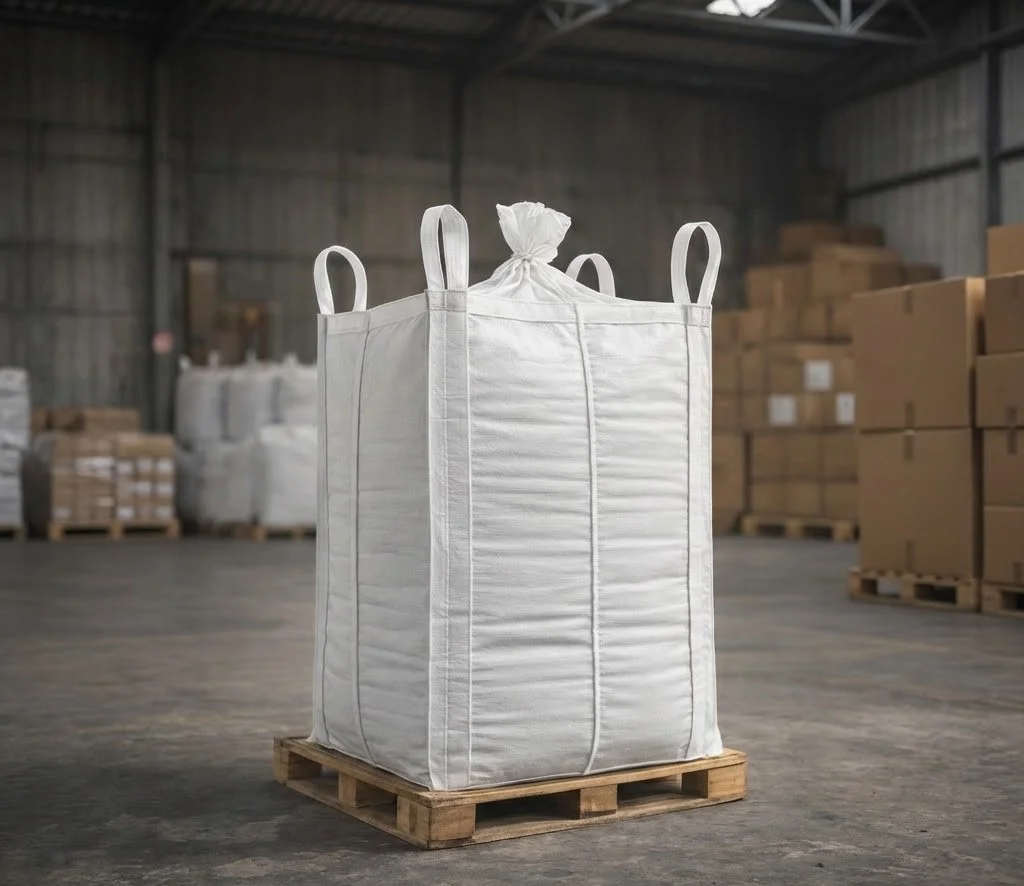
A Baffle FIBC ( also known as Form-stable FIBC or Q-Bag ) is a form-stable big bag fitted with an internal structure (baffles). These baffles ensure that the Q-Bag will remain stable after filling with minimum bulging, which means that the FIBC stays within the pallet dimensions and guarantees an optimum load for any type of transport. This type of big bag saves space during transport because of its stable construction. They cut down on storage space and also transportation costs get reduced by up to 30% as compared to standard FIBC.
A standard bag is flexible in nature and can bulge at the sides when filled losing its square shape. Baffles are extra fabric panels or pieces of string sewn into each of the bag’s four corners. This reinforcement allows the bag to better hold its square shape when filled making them easier to store side by side or stack
Similar to most specialized bags the need for baffles depends on your product and application. Typically, baffled FIBC are often used for finer materials in the food and pharmaceutical industries. Their reinforced structure makes them a better fit where better handling and safety are paramount. Baffled bag advantages include:
Baffle bulk bags are ideal if you have limited space in sea containers or on trucks. Baffles keep the bulk bag square and free from bulging over the pallet. Baffle Bags are constructed with corner baffles to maintain their cubic form once they are filled. The corner baffles are made to allow the material to flow smoothly into all the corners, yet preventing the bag from expanding in the process. Since the shape of the bag is cubic, baffle bags require less storage space and cut down the transportation costs up to 30% compared to the regular big bags. Most of soybean, corn, barley growers uses baffle bags which allows the bag to stand straight. These bags remain very tight, standing straight and erect, so they are easy to handle and look more organized.
Baffle FIBC / Form-stable FIBC / Q-Bag
The Ultimate Guide to Baffle / Q-Bag FIBCs
Baffle FIBCs, also known as Q-Bags, are the engineering answer to space optimization. A standard bulk bag naturally tends to round out into a cylinder when filled. This 'belly' means that when you place two bags side by side on a truck or in a container, you lose valuable space between their rounded corners. You end up shipping air.
Baffle bags solve this by using internal fabric panels (baffles) sewn across each corner inside the bag. These baffles create a bridge that prevents the sides from bulging out. When filled, the bag maintains a distinct cubic or rectangular shape. This allows the bags to touch neatly along their entire side, fitting perfectly onto pallets and into shipping containers.
The results are dramatic: typically a 25-30% increase in payload significantly reducing shipping costs per ton. Beyond economics, they are safer and more stable. A stack of cubic bags is far less likely to topple than a stack of rounded ones, making them premier choice for export shipping.
Commercial Uses
Export logistics is the primary driver for Q-Bags. Companies shipping commodities like soybeans, corn, and barley overseas use them to maximize the weight in every 20ft or 40ft container.
The chemical and resin industries use them to reduce warehousing footprint. Being able to stack bags higher and tighter means lower storage rental costs.
Food ingredient suppliers prefer them not just for space, but because the internal baffles often reduce segregation of blended mixes during transport, keeping product quality consistent.
Advantages
- Reduces transportation costs by up to 30%
- Maintains square shape (no bulging)
- Optimizes storage space
- Improve stability during transport
Applications
- Grains (Soybean, Corn, Barley)
- Food & Pharmaceuticals
- Export shipping (Container optimization)
- Fine powders