
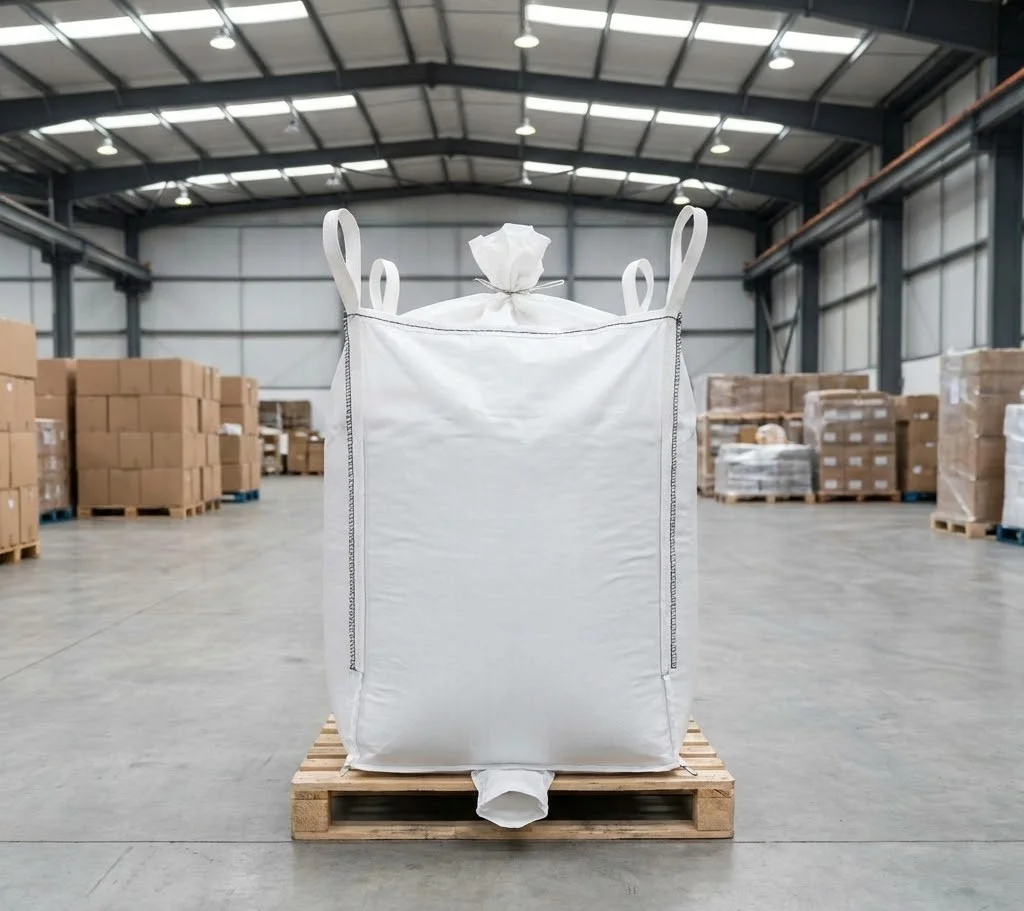
Overview
Type B FIBC are similar to Type A bulk bags in that they are made of plain-woven polypropylene fabrics or other non-conductive material. Like Type A FIBC, Type B bags do not have any mechanism for dissipating static electricity.
The main difference between Type A and Type B FIBC is that Type B bags are made with materials that have a low breakdown voltage, which prevents highly energetic and dangerous propagating brush discharges. Although Type B bulk bags can prevent propagating brush discharges, they are not considered anti-static bulk bags, since they do not dispel an electrostatic charge.
Plain Bag - Low Breakdown Voltage. Prevents Propagating Brush Discharges.
Type B FIBC
The Ultimate Guide to Type B FIBC Bags
Type B FIBCs are a step up in safety from Type A. While they look similar and are also not grounded, the fabric effectively exhibits a low 'breakdown voltage' (< 6kV). This subtle but critical engineering change prevents the formation of highly energetic 'propagating brush discharges' which can ignite dust clouds.
They are designed for safely transporting dry, flammable powders. However, they do NOT dissipate static charge. The charge stays on the bag but is prevented from becoming a dangerous spark type. This makes them a great middle-ground solution: safer than Type A for powders, but cheaper and easier to use than Type C (no grounding needed).
It is crucial to remember they are not anti-static; they are 'anti-spark' in a specific way. They should never be used if there are flammable gases (vapors) present, only for flammable dusts.
Commercial Uses
Food industry for transporting flour, sugar, and milk powder, which can be combustible in dust form.
Pigment and dye manufacturing.
Pharmaceuticals handling stable but combustible powder ingredients.
Advantages
- Prevents propagating brush discharges
- Safe for dry flammable powders
- More protection than Type A
- Low breakdown voltage material
Applications
- Dry flammable powders
- Flour & Starches
- Pigments
- Milk powder
Safe use
- To transport dry, flammable powders
- No flammable solvents or gases present around the bag
Do not use
- When flammable solvents or gases are present around the bag