
Overview
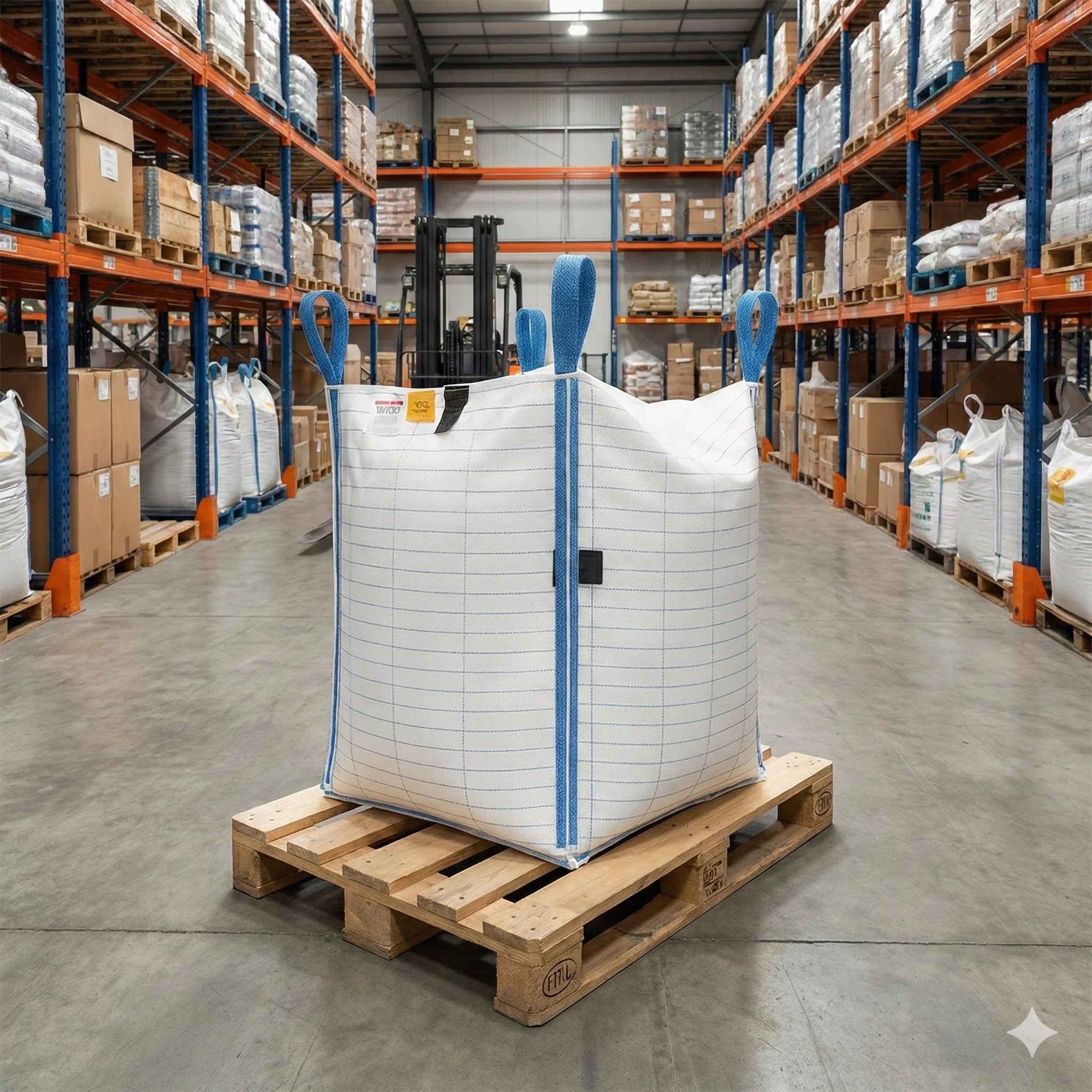
Type C FIBC, also known as conductive FIBC or ground-able FIBC, are made from non-conductive polypropylene fabrics interwoven with conducting threads traditionally sewn in a grid pattern. These conducting threads must be electrically interconnected as well as connected to a designated ground/earth during filling and discharging. This connection to the ground/earth during filling and discharging is imperative to the safe use of Type C bulk bags.
• Interconnected Conductive Threads • Dissipates Charge to Ground • Rg < 10⁷ ohm
Type C FIBC / Conductive FIBC
The Ultimate Guide to Type C Conductive FIBCs
Type C FIBCs, or Conductive bags, are the highest standard for static safety in environments where explosive gases or vapors are present. They are constructed with a grid of conductive threads woven into the fabric. All these threads are electrically interconnected and meet at a grounding point on the bag.
The critical rule for Type C bags is: THEY MUST BE GROUNDED. During filling and discharging, the bag must be connected to an earth ground. This allows any static charge generated to instantly flow harmlessly to the ground, preventing any spark potential.
They are essential for safety in chemical plants or any facility where flammable solvents are present. If you need 100% confidence that no static spark will occur, Type C is the mandatory choice.
Commercial Uses
Chemical processing plants where solvent vapors are always present.
Handling highly combustible dusts that require very low ignition energy.
Paint and coating industries using volatile ingredients.
Advantages
- Dissipates electrostatic charge safely
- Suitable for flammable atmospheres
- Groundable for high safety
- Essential for volatile environments
Applications
- Flammable powders
- Environments with solvents/gases
- Chemical processing
- Explosive dust handling
Safe use
- To transport flammable powders
- When flammable solvents or gases are present around the bag
Do not use
- When ground connection is not present or has become damaged